

📰 The Good Brief
Edition 1 – June 2025 | Clarity. Confidence. Comms that do good.

👋 Welcome
Hey there — and welcome to the very first edition of The Good Brief!
If you’re here, chances are you care about doing good work the right way — and you want clear, practical info without the waffle. That’s exactly what this newsletter is about: helping small charity teams stay confident, compliant, and creative in the work they do.
Whether you found us through the Code Confident checklist or a post on LinkedIn — I’m glad you’re here.
Let’s dive in 👇
📅 NEW: The Code Confident Planner
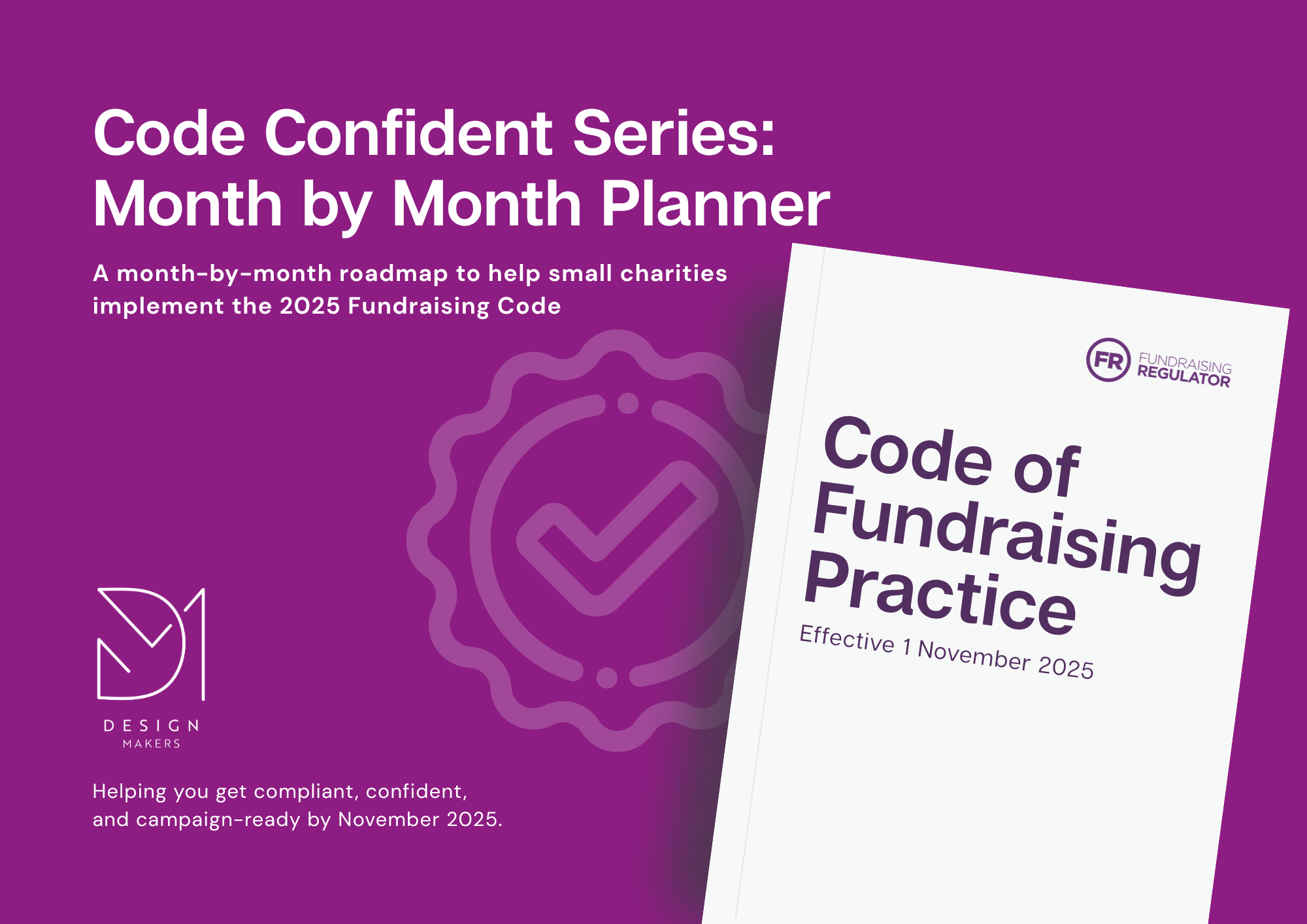
Your month-by-month guide to staying compliant by the November deadline
We’ve already shared the what — now here’s the how. This planner is designed to help small and mid-sized charity teams stay on top of the 2025 Fundraising Code updates without feeling overwhelmed.
🗂️ Inside, you’ll get:
A step-by-step plan from June to November
What to review, update, or fix each month
Key deadlines, team prompts and planning checklists
Built-in breathing space (because you’re human)
🎯 Whether you’re leading on appeals, managing a website, or reviewing supporter journeys — this is your roadmap.
⏪ Missed the checklists?
📥 Code Confident – Part 1: Design & Comms Edition
Covers accessible design, appeal disclaimers, and layout dos and don’ts
📎 👉 Get Part 1
📥 Code Confident – Part 2: Fundraising Practice Edition
Covers appeal transparency, consent, over/under raising, and platforms
📎 👉 Get Part 2
✅ Quick Win of the Month
Update your disclaimer copy now — before your next appeal goes live
If your appeal has a target, the new Code says you must explain:
What happens if you raise more than needed
What happens if you don’t meet your goal
Where donations will go if the project can’t go ahead
Here’s a free swipe able line you can use:
“Any extra funds raised will support similar projects or our wider services. If this appeal cannot go ahead, donations will be directed to the closest alternative.”
💡 This should appear before the donation ask — not after the donate button.
🧠 Brain Food
AI in Charity Comms: What You Need to Know
Charities are starting to use AI to make the most of limited time and budgets — but where’s the line between helpful and risky?
Here’s how teams are using AI right now:
Generating content ideas and captions
Creating social graphics and posters
Helping draft emails or reports
Summarising research or supporter feedback
And here’s how to use it responsibly:
🔐 Respect supporter data
💬 Be transparent about AI use
🧠 Use human checks on tone, facts and fairness
🧑🏫 Train your team (even just a quick lunch & learn)
👉 Vote and we’ll share the results next month.
📣 Shoutout Corner
To the 400+ charity professionals who downloaded Part 1 and 2 — you helped shape this series. The feedback’s been incredible and the planner wouldn’t exist without your questions and support. Thank you.
Have a topic you'd like us to cover? Hit reply and let me know.
Until next time,
Manjeet
Charity Consultant | Director, Design Makers
WEB: www.designmakers.co